
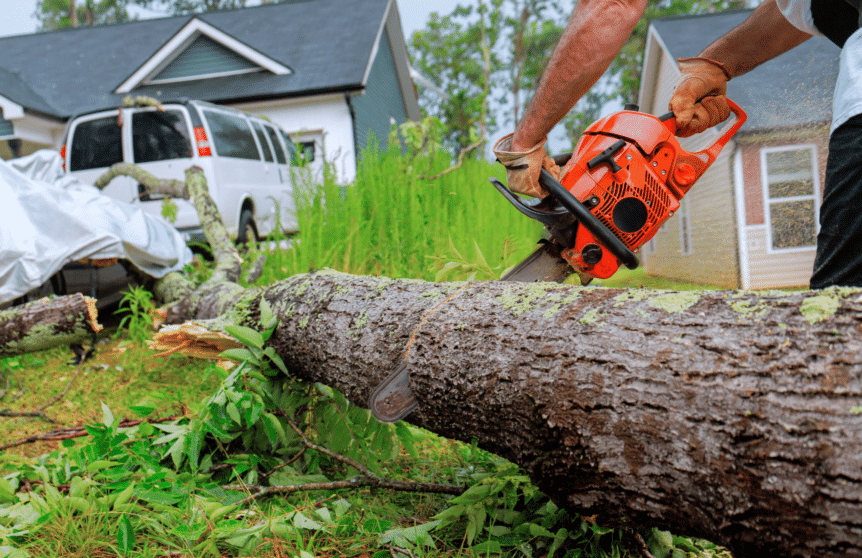
Removing a tree may seem like a simple weekend project, but it’s one of the most dangerous jobs a property owner can attempt. Every year, homeowners are injured or cause significant property damage because they underestimate the risks involved. Whether you’re caring for a home in Illinois, clearing land in Wisconsin, managing farmland in Iowa, or maintaining commercial property in Indiana, understanding the dangers of DIY tree removal can help you avoid injury and costly mistakes.
Tree Removal Is More Complex Than It Looks
Every tree is different. Factors like height, weight, natural lean, wind conditions, uneven ground, and nearby buildings all affect how a tree will fall. A tree that appears healthy can also have hidden decay, making it unpredictable once cuts are made.
Professional tree crews evaluate these conditions before beginning work, carefully planning the safest removal method for both people and property.
Chainsaws Aren’t the Only Danger
While chainsaws require skill and proper safety equipment, they’re only part of the job. Tree removal also involves understanding how wood reacts under pressure, making precise cuts, and maintaining safe escape routes if the tree shifts unexpectedly.
Without proper training, one incorrect cut can cause the trunk or large limbs to split, twist, or fall in an unintended direction.
Falling Branches and Property Damage
One of the biggest hazards during tree removal comes from falling limbs. Dead or weakened branches can break loose without warning, causing serious injuries or damaging anything below.
Trees are often located near homes, garages, fences, driveways, and landscaping. Even a slight miscalculation can result in expensive repairs, including damaged roofs, broken windows, or crushed vehicles. In many cases, repairing that damage costs far more than hiring a professional tree service from the start.
Trees Near Power Lines Require Extra Caution
Removing trees near overhead power lines should never be treated as a DIY project. Working around energized utility lines presents serious electrical hazards that require specialized training and coordination with utility providers.
Professional crews understand safe working distances and have the equipment needed to complete these jobs safely.
Specialized Equipment Makes Tree Removal Safer
Many larger trees can’t be removed safely with a chainsaw alone. Professional tree removal companies use equipment such as skid steers, grapples, feller bunchers, stump grinders, and debris-hauling trucks to control heavy sections of the tree and safely remove debris.
Using the right equipment reduces manual labor, improves efficiency, and helps minimize damage to the surrounding landscape.
Cleanup Is Part of the Process
Cutting down the tree is only half the job. Large trees generate substantial amounts of logs, branches, and brush that must be removed or recycled. Many projects also require stump grinding and site restoration before the area is ready for use.
Hiring a professional ensures the entire project—from removal to cleanup—is completed efficiently and safely.
Choose Safety Over Shortcuts
DIY tree removal may seem like a way to save money, but the risks of personal injury, property damage, and liability often outweigh any potential savings. Professional tree removal provides the experience, equipment, and planning needed to complete the job correctly the first time.
At Central Tree, LLC, we provide professional tree removal, tree trimming, stump grinding, land clearing, brush removal, and complete site cleanup throughout Illinois and Southern and Central Wisconsin. Based in Pingree Grove, IL, our experienced team uses advanced forestry equipment to complete every project safely and efficiently.
If you have a tree that needs to be removed, Request a Free Quote from Central Tree, LLC, or Stop By Our Location at 14N705 US Highway 20, Pingree Grove, IL 60140 to learn more about our complete tree care and land management services.