

Many property owners unknowingly make mulch mistakes that can harm trees, shrubs, and flower beds rather than help them. When applied correctly, mulch helps retain soil moisture, regulate temperatures, suppress weeds, and improve soil quality over time. Mulch is one of the simplest and most effective tools homeowners can use to improve the health and appearance of their landscape.
Mulch Mistake #1: Creating a “Mulch Volcano”
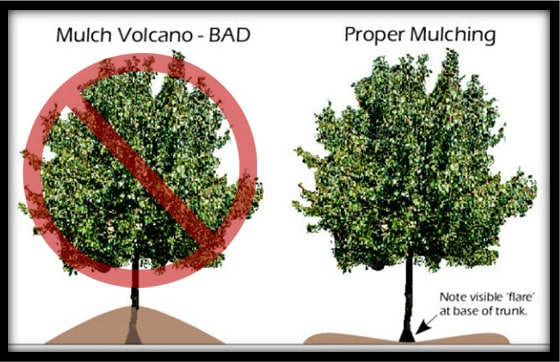
Image credit: Sustainable Saratoga
One of the most common landscaping mistakes is piling mulch directly against a tree trunk, creating what professionals call a “mulch volcano.”
While it may appear neat and attractive, excessive mulch around the trunk traps moisture against the bark. Over time, this can lead to:
- Bark decay
- Insect infestations
- Disease development
- Root girdling
- Reduced oxygen flow
The Correct Approach
Keep mulch several inches away from the base of the trunk. Instead of building upward, spread mulch outward in a wide ring around the tree. This allows the root zone to benefit while keeping the trunk dry and healthy.
A properly mulched tree should resemble a donut shape rather than a volcano.
Mulch Mistake #2: Applying Too Much Mulch
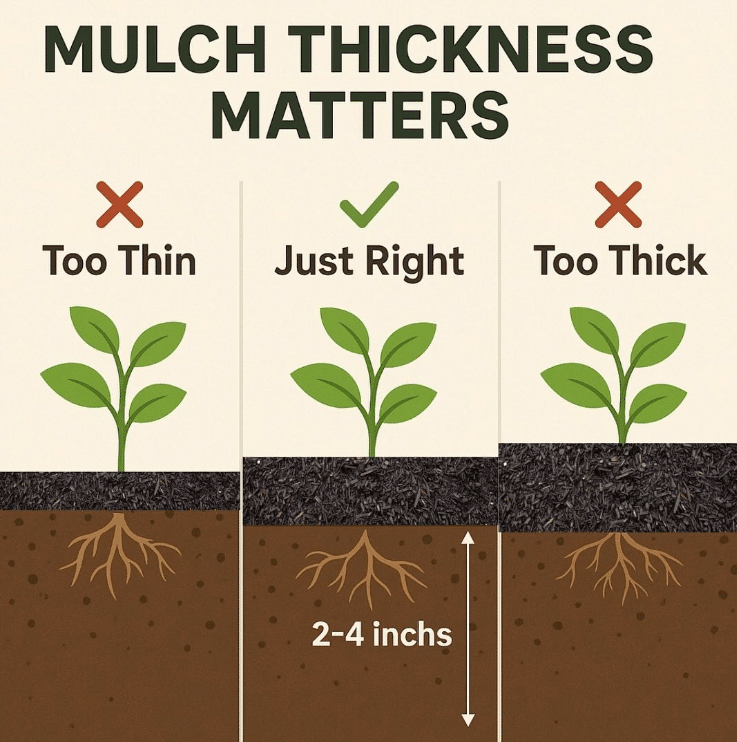
Image Credit: Apexaggregates
Many homeowners assume more mulch equals better protection. In reality, excessive mulch can suffocate roots and create unhealthy soil conditions.
Overly thick mulch layers can:
- Prevent water from reaching roots
- Restrict oxygen movement into the soil
- Encourage shallow root growth
- Create fungal issues
The Correct Approach
Most landscape areas only require 2 to 4 inches of mulch depth.
For established trees and planting beds:
- 2 inches works well in many situations.
- 3 to 4 inches is ideal for weed suppression and moisture retention.
- Avoid exceeding 4 inches unless specifically recommended for a unique application.
If old mulch remains from previous seasons, measure the total depth before adding new material.
Mulch Mistake #3: Using Poor-Quality Mulch
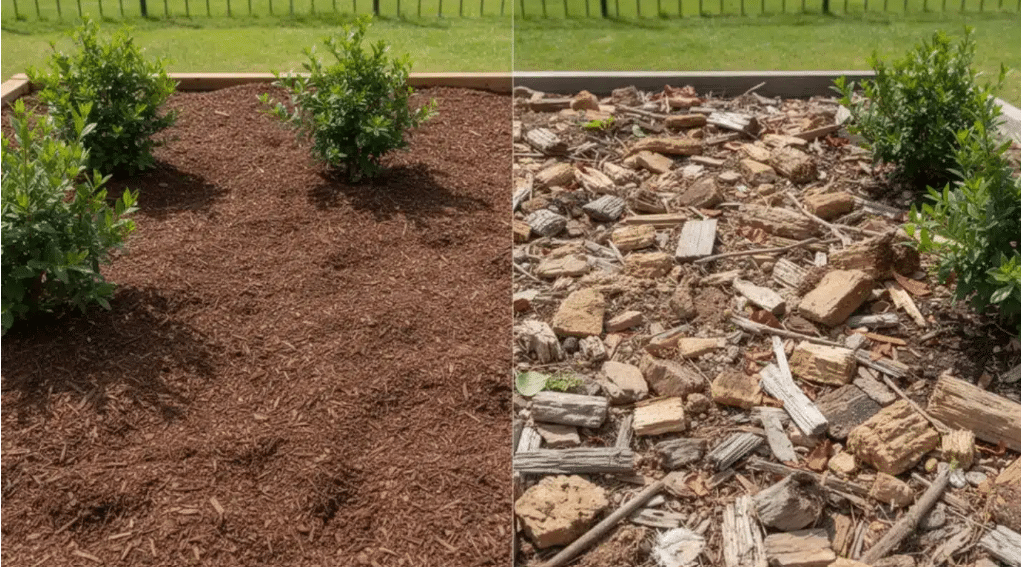
Image source: Mulch Pros
Not all mulch products are created equal. Some low-quality materials may contain construction debris, pallet wood, contaminants, or inconsistent chip sizes that break down unevenly and create an unattractive appearance. Quality matters when selecting mulch for your property.
The Correct Approach
Choose mulch produced from 100% natural hardwood whenever possible. Consistent chip size provides better coverage and a cleaner appearance while supporting long-term soil health.
Professional-grade hardwood mulch offers:
- Better moisture retention
- Improved weed suppression
- More uniform coverage
- Enhanced landscape appearance
- Environmentally responsible recycling of wood materials
Mulch Mistake #4: Ignoring Seasonal Maintenance
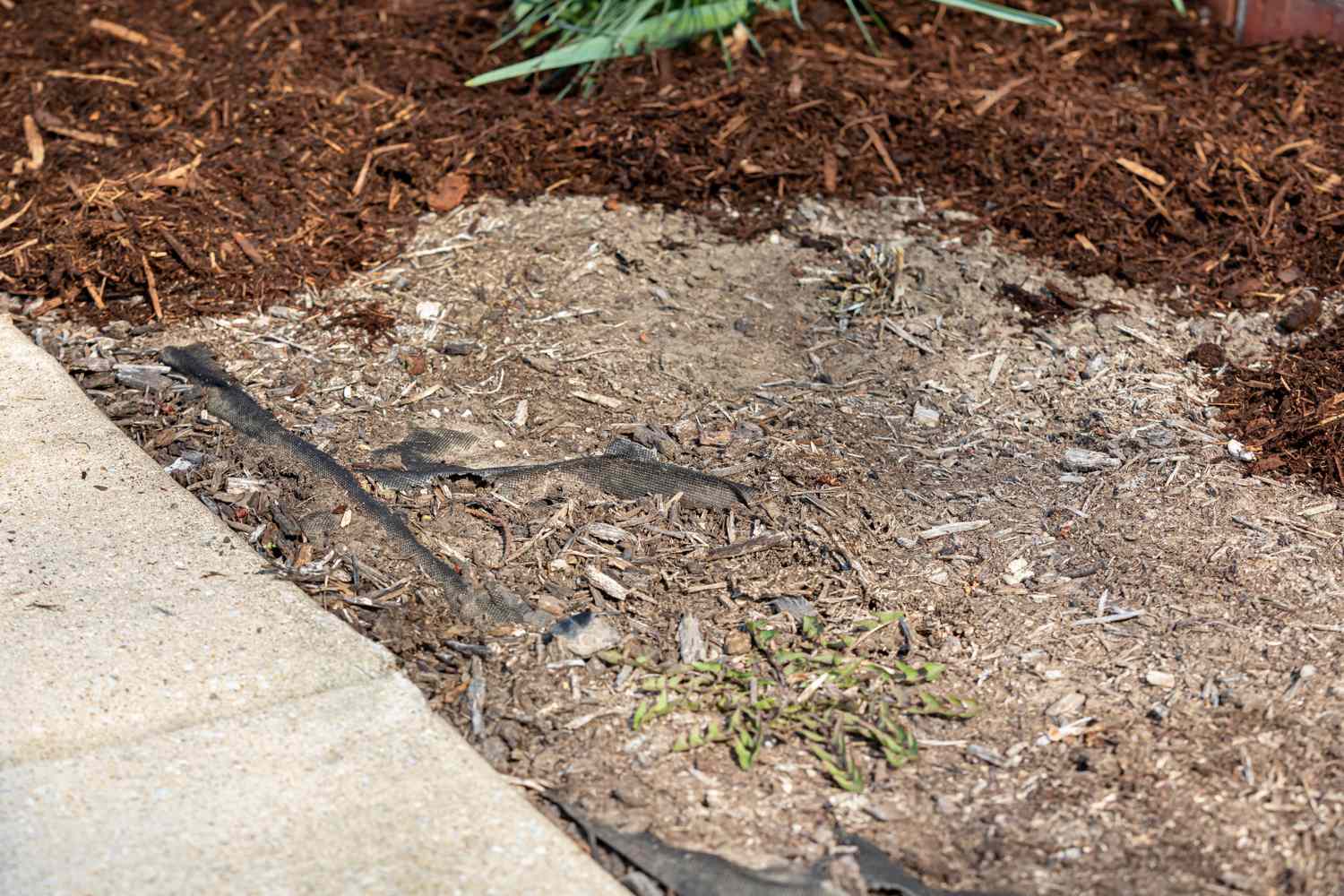
Image Credit: Southern Living
Mulch naturally decomposes over time. As it breaks down, its appearance fades and its effectiveness decreases. Many homeowners either forget to replenish mulch or apply excessive amounts year after year without checking existing depth.
The Correct Approach
Inspect mulch annually.
Look for:
- Faded color
- Reduced depth
- Weed breakthrough
- Areas displaced by rain or wind
In most Midwestern climates, refreshing mulch once per year is sufficient to maintain both appearance and functionality.
Mulch Mistake #5: Mulching Too Close to Shrubs and Plants
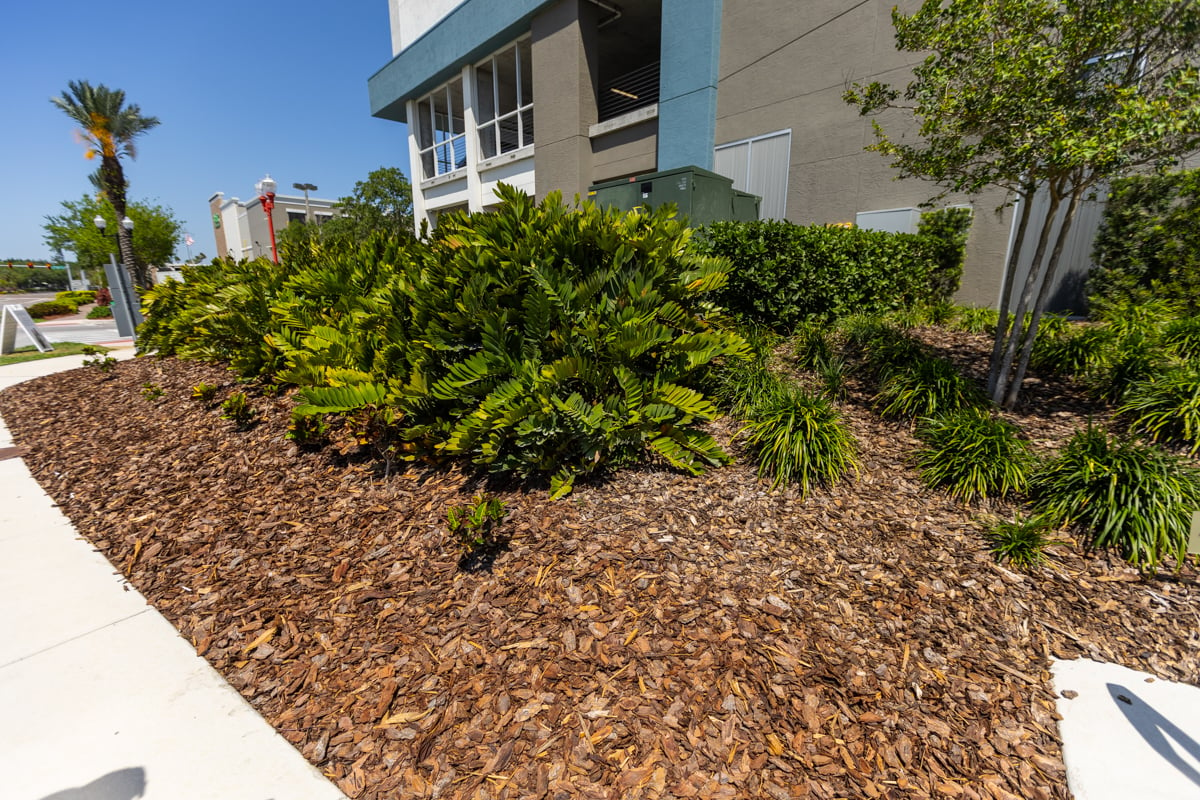
Image Credit: Landcrafters
Trees aren’t the only plants affected by improper mulching. Shrubs, ornamental grasses, and flower beds can also suffer when mulch is piled directly against stems and crowns.
Excess moisture around plant bases can increase the risk of:
- Crown rot
- Stem diseases
- Insect activity
- Premature plant decline
The Correct Approach
Leave a small gap around the base of shrubs and plants to encourage airflow and reduce moisture buildup.
This simple adjustment can significantly improve plant health and longevity.
Invest in Healthier Landscaping
Mulch is much more than a decorative finishing touch. Proper application plays a critical role in protecting trees, shrubs, and planting beds while enhancing the overall appearance of your property. Avoiding common mulch mistakes such as over-mulching, creating mulch volcanoes, and selecting low-quality materials can help your landscape thrive throughout every season.
Central Tree, LLC manufactures our premium hardwood mulch year-round at our Pingree Grove, Illinois facility using 100% natural hardwood logs. We offer dyed mulch in black, dark brown, chocolate, gold, and red, as well as natural double grind, triple grind, and certified playground mulch for residential, commercial, municipal, and wholesale customers throughout Illinois, Wisconsin, Iowa, and Indiana.
Request a Free Quote for mulch delivery or bulk pricing, or Stop By Our Location at 14N705 US Highway 20, Pingree Grove, IL 60140 to learn more about our mulch products and landscaping solutions.